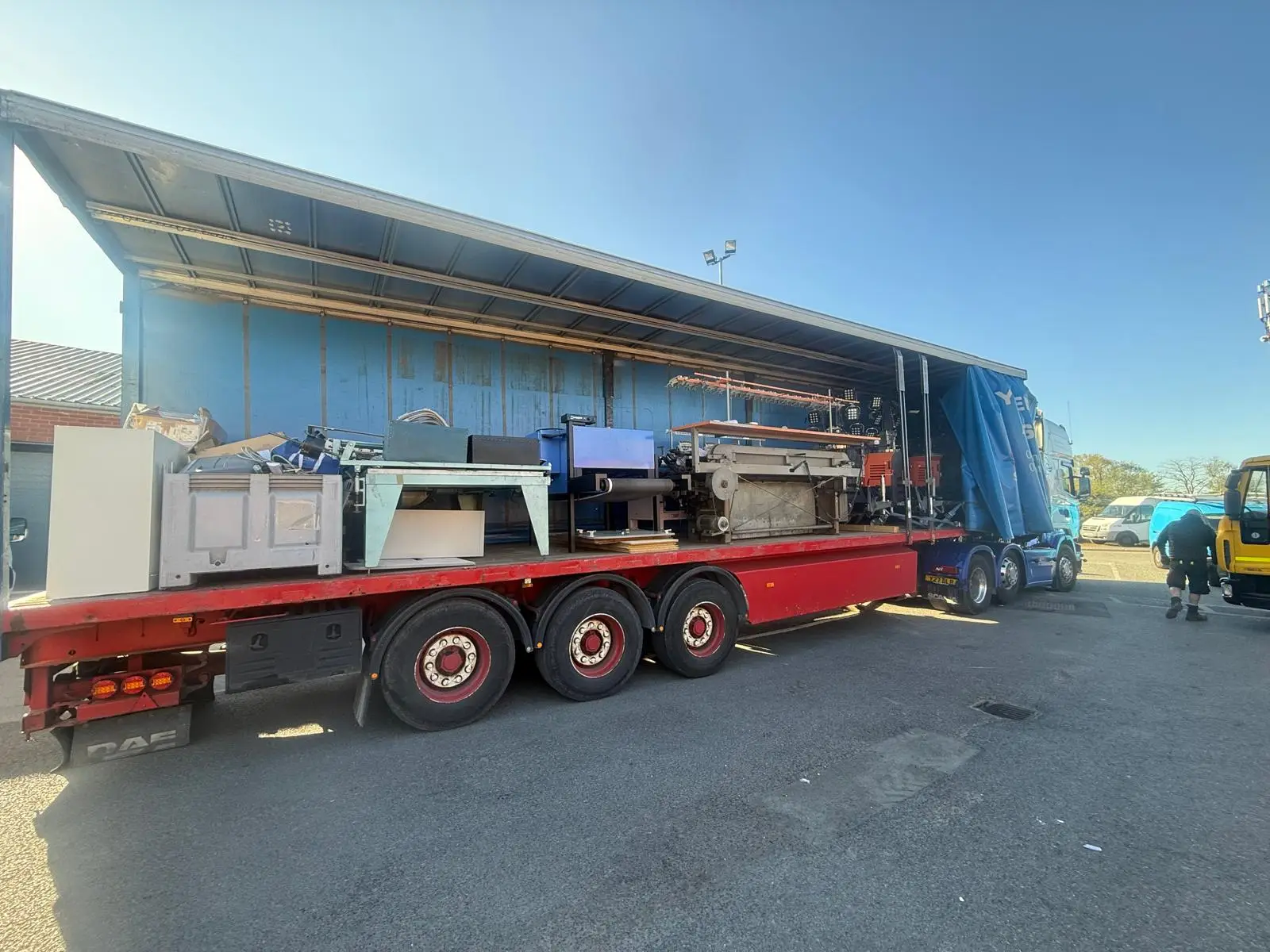
Once you’ve decided to sell a machine, the next question is who to sell it to. And the four options available all sound reasonable until you look at what they actually cost you in time, fees and certainty.
Here’s an honest comparison, including the situations where we’re not the right answer.
| Direct buyer | Auction | Broker or agent | Scrap merchant | |
| Time to money | Days | 6 to 12 weeks | Open ended | Days |
| Sale guaranteed | Yes | No | No | Yes |
| Fees | None | Commission plus entry costs | Commission on sale | None |
| Removal cost | Included | Usually buyer’s cost | Varies | Included |
| Price ceiling | Market value | Can exceed market value | Highest potential | Metal weight |
| Price floor | Agreed upfront | Reserve, or nothing | Nothing | Weight |
| Effort for you | Low | Medium | Medium to high | Low |
Selling to a Direct Buyer
A direct buyer purchases the machine outright with their own money and takes the resale risk themselves.
What you get: a firm figure agreed upfront, a collection date, and payment on a known timescale. Removal, dismantling and transport are normally included in the offer rather than charged separately.
What you give up: the top of the market. A direct buyer needs a margin to make the transaction work, so the figure sits below what an end user might eventually pay.
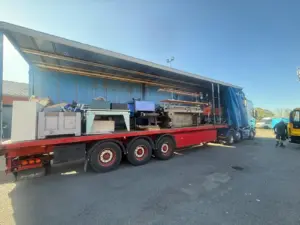
When it works best: you have a deadline, you need certainty, you don’t want to manage the process, or you have machinery that needs proper lifting gear to remove.
When it doesn’t: you own something genuinely rare with several end users chasing it, and you have months to wait.
Selling at Auction
Auction houses put your machine into a timed or live sale and take a percentage.
What you get: competitive bidding. On the right machine at the right sale, an auction can beat every other route. Multiple bidders who all need the same equipment will push a price above what any single buyer would offer.
What you give up: certainty and time. You’ll usually wait six to twelve weeks for a sale date, then longer for settlement. Commission is typically a meaningful percentage, and there are often entry, photography and marketing costs whether the machine sells or not.
The part people miss: if bidding stops below your reserve, you still have the machine, you’ve lost the time, and you may still owe fees. And the buyer normally arranges removal, which limits your pool to bidders who can actually get it out.
When it works best: popular, in demand machinery with a broad buyer base, where you have time and can absorb the risk of it not selling.
When it doesn’t: you’re on a lease deadline, the machine is specialist with few natural buyers, or removal is complicated.
Using a Broker or Agent
A broker lists and markets your machine, finds a buyer, and takes commission on completion.
What you get: the highest potential price. A good broker with the right contacts can find an end user who pays close to full market value, and you keep ownership until it sells.
What you give up: any certainty about when, or whether, that happens. Brokers only get paid when a sale completes, which is fine in principle. But it means your machine sits in your building indefinitely while you wait, still taking up space and still your responsibility.
When it works best: high value, in demand equipment where the difference between broker price and direct buyer price is large enough to justify the wait.
When it doesn’t: you need the space, you have a date to hit, or the machine is mid range and unlikely to attract a premium buyer.
Selling to a Scrap Merchant
A scrap merchant buys on weight and recycles the metal.
What you get: speed and simplicity. They’ll take almost anything and remove it quickly.
What you give up: most of the value, if the machine works. Scrap prices are calculated on tonnage, not capability, so a working machine and a seized one of the same weight are worth roughly the same to a scrap buyer.
When it works best: the machine is genuinely finished. Obsolete, unsupported control, no parts available, and removal costs more than any buyer would pay for it.
When it doesn’t: the machine still runs. This is where sellers lose the most money, usually because nobody got a valuation before the lorry arrived.
How to Choose
Work through these four questions.
1. What’s your deadline? Firm date in the next month or two: direct buyer. Six months or more: auction or broker become realistic.
2. How rare is the machine? Common and in demand: any route works, so pick on speed and cost. Specialist with few buyers: a direct buyer or broker who knows the market beats a general auction.
3. Who’s paying for removal? On heavy machinery this can be a large number. Check whether it’s included in the price or comes off it. A direct buyer offer with removal included often nets more than a higher auction hammer price where you pay for the lift.
4. What happens if it doesn’t sell? Direct sale: not a scenario. Auction: you still have the machine and possibly a bill. Broker: you wait longer. Be clear on the downside before you commit.
The Fee Comparison People Forget
Headline prices and net proceeds are different numbers.
Compare like for like by working out what actually lands in your account. Take the gross figure, then subtract commission, entry and marketing fees, removal and transport if you’re paying, storage while you wait, and the cost of the floor space over that period.
A direct offer of a given amount with everything included frequently nets more than a higher auction price once the deductions come off. Ask every option to spell out the net figure rather than the headline.
Where We Sit, Honestly
We’re a direct buyer, so this is our route. Our position on it is straightforward.
If you have time, a genuinely sought after machine and no removal complications, an auction or a good broker may well net you more. We’d rather tell you that than quote a figure you accept without knowing the alternatives.
Where we’re the better answer is when you need certainty, a firm date, and the awkward parts of the job handled. That’s most of the sites we deal with, but not all of them.
Frequently Asked Questions
What is the best place to sell used machinery in the UK? It depends on your timescale and the machine. Direct buyers give certainty and speed with removal included. Auctions can achieve more on popular equipment if you can wait. Brokers have the highest ceiling but no guarantee. Scrap is only sensible when a machine is genuinely finished.
Do machinery auctions get better prices? Sometimes. Competitive bidding on in demand machinery can exceed what a single buyer offers. But you carry the risk of it not selling, you wait weeks for a sale date, and commission plus removal costs reduce what you keep. Compare net proceeds, not hammer prices.
How much commission do machinery brokers charge? It varies by broker and machine value, and is normally a percentage of the sale price. Ask for the figure in writing along with what happens if the machine doesn’t sell, since some agreements include exclusivity periods.
Is it worth selling machinery privately? It can be if you have time, the machine is straightforward to remove, and you’re comfortable dealing with viewings, negotiation and payment risk. The main problems sellers hit are buyers who can’t arrange removal, and payment terms going wrong after collection.
How quickly can I sell a machine? A direct sale can complete within days of an accepted offer. Auctions typically run six to twelve weeks from entry to settlement. Broker sales have no fixed timescale.
Do I have to pay to have my machinery removed? Not with a direct buyer, where removal is normally inside the offer. At auction the buyer usually arranges and pays for removal, which can limit who bids. Always confirm who pays, because on heavy machinery it changes the maths significantly.
Deciding What Suits You
There’s no single right answer, only the right answer for your machine and your timescale.
If you want a firm figure to compare the other routes against, a valuation costs nothing and gives you a real number to work with rather than a guess.